We peered through the mist at the flat, fern-like fronds.
Like the filaments of frost which form on winter morning windows, their fine tendrils branched and curved, dark green against the clean white countenance of the rock. We were high up on Glas Bheinn, on its broad plateau of fractured quartzite, and it seemed improbable to find these delicate, intricate forms upon such an exposed and barren boulderfield.
We crouched closer, took photos, consulted each other in a damp huddle. The mysterious markings didn’t come off with rubbing so presumably weren’t lichen or anything living. Were they plant fossils then? The quartz grains of the rock had once been laid down on an ancient Laurentian seashore, so were we looking at the remnants of coastal growths which had somehow endured the intervening aeons of upheaval?
When we returned, I made enquiries. The rock—Cambrian quartzite—was older than plants, so the fern patterns weren’t botanical. They were dendrites, colourings formed by the seepage of mineral-rich water into the rock, and were probably made by manganese oxide.
Just before we’d come upon them, we’d been marvelling at the rich reds and peaches of the adjacent rock faces, a product of iron oxide staining, the tender colourations brought out by the wet sheen of the rock, and by the limited sphere of visibility in which we were operating. We had climbed into cloud and, without the long views out to other peaks and islands, our attention was focused on the near at hand. It was a day of close encounters, of fine details, of moments in time imprinted indelibly in our minds.
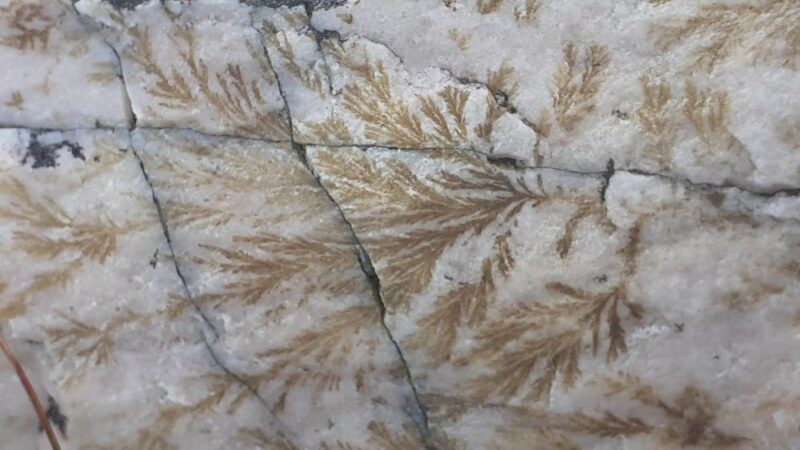
Glas Bheinn, Assynt, Scotland
20th July 2026