anew

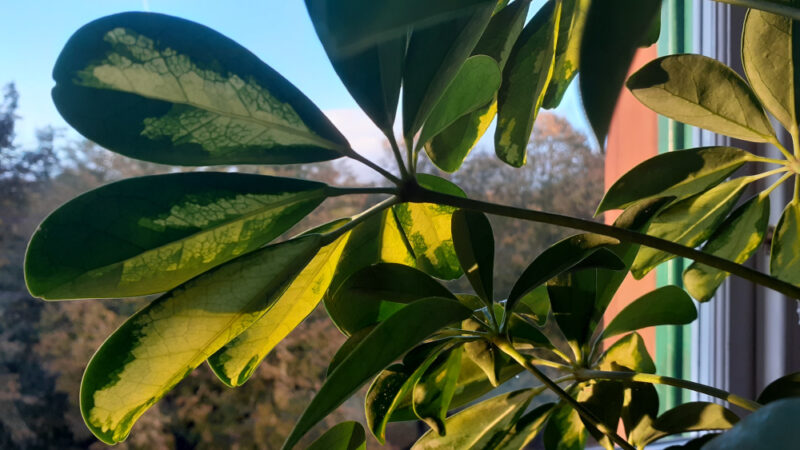
One of the good things about having an impaired memory is that each season is new. This is my sixth spring since the concussion I haven’t fully recovered from, and my sixth successive spring here in Lochinver, but it could almost be the first.

It’s not that I don’t remember last spring but it feels so far away that it’s as if it happened years ago. I do have some feeling of familiarity: as I walk along the slim path beside the river, the intense green glow of the young beech leaves in the evening sunlight arouses a sense of recognition, of greeting, but it’s faint and indistinct, like the memory of something once loved but long gone, and difficult to firmly recall.

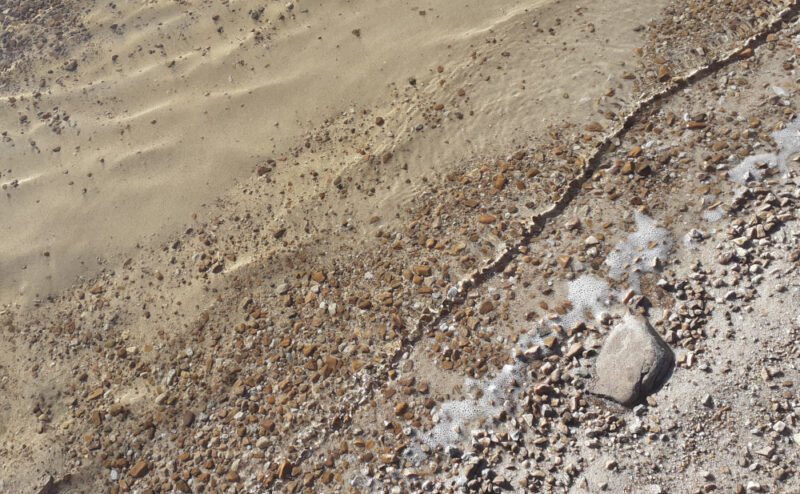
I walk on, following the path until it reaches a bend in the river and falls into shadow, then turn back. Now the sun is in front of me, low in the north-west. Its golden light is filtered through the varied arboreal foliage generating green hues of vivid tenderness. I stop in a copse of beech trees and soak it up: a sweetness of light, and a sweetness of flavour too as I pluck a handful of the smaller leaves and fold them, one by one, into my mouth. Each leaf is soft and downy on my tongue and as I bite down, a subtle succulence is released. This feels more familiar, as if the tongue’s memory is more faithful than the eyes’ and I’m reassured to know that my body holds what my mind can’t easily access, although, I tell myself, what matters is what’s present now.

I stroll a few steps further then am stopped by a rowan, its emerging fistfuls of leaves brightly backlit, their serrated fringes casting finely-toothed shadows on each other as they layer and overlap in their open field of light. It’s the mosses which captivate me the most, however, covering the rocks by the path and the larger boulders alongside, thousands of tiny hairy fingers thronging upward in silent solar supplication. They seem to glow of their own accord, as if they’re not reflecting light but emitting it, and those in the shadier pockets of the wood appear almost phosphorescent.

The fire in leaf and grass
so green it seems
each summer the last summer.

Despite my disrupted memory of recent years, I still remember this stanza of a poem* we studied at high school: each summer the last summer, each moment the last and only of its kind. In my case, now, it’s the inverse: each season the first season, each spring the first to generously and gladly unfurl. I don’t think it matters though. It’s the gratitude which counts.

*Living by Denise Levertov

River Inver, Assynt, Scotland
8th May 2026
company

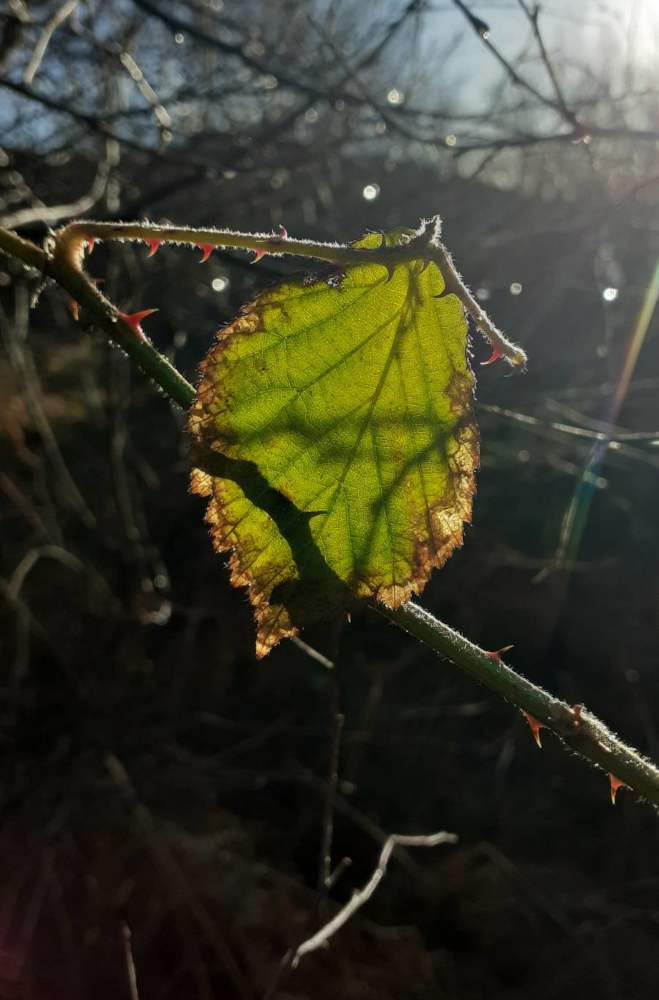
the wind, well-travelled,
the sheltering sun,
a pebble,
        waiting in our shadow

Ullapool River, Wester Ross, Scotland
8th September 2025

shoreward

I walk round to the headland beyond the harbour looking for solace.

And what do I find?

A carpet of Lady’s Mantle in a backlit yellow haze;
a red deer hind and bambi-spotted calf stepping quietly behind me;
a gannet circling over the spread blue waters in front – the sudden dive!;
a heron flapping low and level across the loch;
the cries of oystercatchers, terns, hoodies, gulls;
the blue humps of Harris on the horizon;
and in the north-west, the sun, pale gold, shining.

Is it enough?
Or is it too much to countenance?

I wrote once that oceans begin in our hearts.
I make my way tentatively towards the shore.

Lochinver, Assynt, Scotland
5th July 2025

candle

A candle lit on a summer evening in Sutherland.
What decadence, what superfluity.
What sustained need for flame.

Lochinver, Assynt, Scotland
25th May 2025

high fliers

Almost more startling than the jagged granite needles are the deft black birds which coast smoothly around them. They move like shadows, soundless and sure, dark wings and tails fanning out elegantly beneath us as we stare down from our perch. Mont Blanc rears above us, its rounded snowy cap strangely benign compared to the sheer faces and sharp fractures of the cliffs and spires which immediately surround us, and to which we are so improbably attached.

And how are we attached? How did this cluster of rooms and walkways ever get built onto this shard of red granite? As if stringing up a cable car was not challenge enough! We wander around the sunny terrasse in a daze of marvel and altitude-induced light-headedness. We ascended quickly – 2807 metres (9209 feet) in fifteen minutes – and after gazing up at these peaks for days, I’m finding it difficult to grasp that I’m really here, on the Aiguille du Midi, among the highest mountains in Europe.

I lean over the railing and watch the birds again. ‘Chocards’ my friend calls them, which I think must be choughs. I’ve never seen them before. They fly mostly in pairs, gliding buoyantly, their swift animal grace a surprising presence among these endless serrations of bare rock and snow. If I’d expected to see any birds this high, I would have assumed they’d be grand like eagles or dainty and snow-coloured like buntings, yet these most closely resemble jackdaws, birds I associate with towns and cities. Like jackdaws, they seem untroubled by our human encroachments, swooping over pinnacle and balcony alike. Unlike the procession of bulkily-clad skiers clattering their way to the slopes below, they are the true alpinists, utterly at ease in the austere drama of these mountains.

As I wish I was. I could stay here for eternity, with these radiating mountains and this dazzling sun which, at 3842 metres, I’m closer to than I’ve ever been. However, my legs feel heavy and my head is dizzy with height and brightness. I turn reluctantly to leave the terrasse. As I open the door, two of the birds fly close overhead and I see their pale neat beaks, their red legs and feet tucked tightly in. I step inside and walk slowly down towards the cable car but my mind, flight-filled, is light as a feather.

from the Aiguille du Midi

Téléphérique Aiguille du Midi, Chamonix, Haute-Savoie, France
6th April 2025

Fox Point

This beach could be the end of the world. It isn’t, evidently: on all sides the horizon meets land – the dark spread lumps of the Summer Isles, the blue and white heights of Fisherfield, the tapering shelf of Rubha Reidh, the tall northern headlands of Skye, with the russet slopes of Isle Ristol, to my right, closing the circle.

It’s the light which gives this end-of-the-world sensation. It’s that northern light, that late November light, low, rare, and precious. I can see its source – the sun over the mountains there, maybe ten degrees above the horizon, filtered slightly through a smooth swathe of cloud – but the light doesn’t seem to have come from there. It seems to have come from some farther source, meeting us from great distance, or to be its own source, a light come mysteriously to rest here on these round pink boulders, on these frosted green mats of mossy grass, a light come, unbidden, to greet this quiet, aching heart.

I get up from my seat among the boulders and return to the little coastal path, following its slim line as it winds up and down over worn rocks and icy puddles and through the dark heather and crunchy bracken of the moor. As I approach Fox Point, the horizon opens: the mainland mountains extend themselves southward and in the south-west the Minch becomes visible, an empty line of cold silver. I walk round the headland to a narrow beach, a rocky cleft filled with boulders, and sit down at the back of it. The air holds a stiff chill and the frosted boulders glint softly in the pale gold shorelight. Across the water, the mountains – of Fisherfield and now Torridon – stand in a light of their own: a deep blue light, almost a dusk light, although it’s just past noon. The cloud is evenly drawn across the sky and the sun hangs in its upper stretches, white and ghostlike, almost translucent, behind its thin, striated veil. The mountains are only about ten miles across the loch but they look as if they exist in a different universe, on a coast utterly unreachable, a shore one could never sail to.

I stare over searchingly. It’s so unfathomable and beautiful that I don’t know what to do. I think of Kerouac’s phrase, ‘end of the land sadness end of the world gladness’. He wrote that in San Francisco, in a warm California summer night. This is another season, another century, another continent, another coast, but has anything changed? We’re still inexorably drawn to edges. In our hearts, oceans begin.

Fox Point / Rubha a’Mhadaidh-Ruaidh, Coigach, Scotland,
28th November 2024