frost
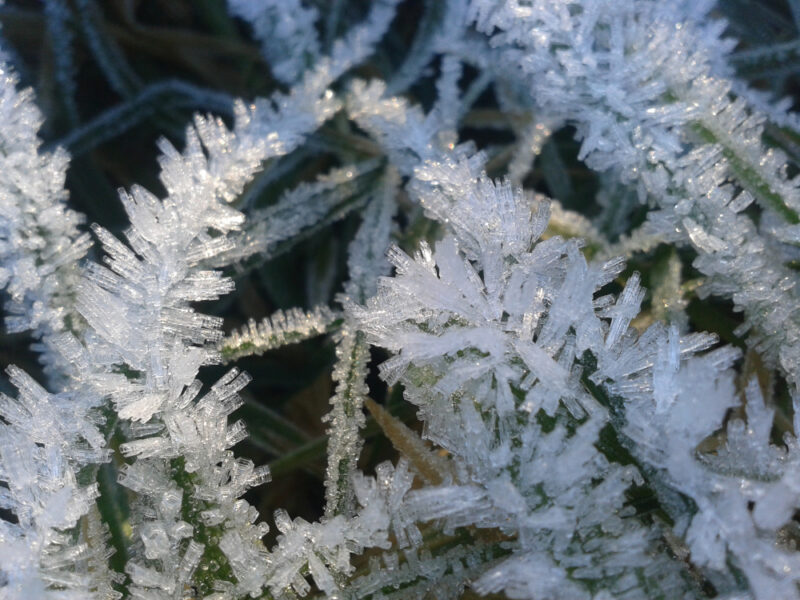
Culag woods, Assynt, Scotland
31st January 2019
Culag woods, Assynt, Scotland
31st January 2019
Loch na Gainmhich, Assynt, Sutherland, Scotland
5th September 2018
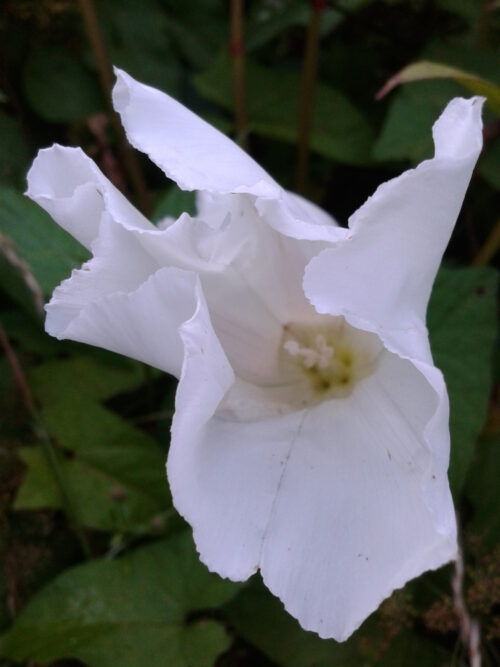
milkhood
foldwhite
petalshade
Cwm Garw, Glamorgan, South Wales
13th July 2018
Loch Faskally, Perthshire, Scotland
15th June 2018

the little white sakura of Scotland
a taiko heart beating beneath the blooms
On The Corner studio at The Space, Glasgow, Scotland
6th May 2018
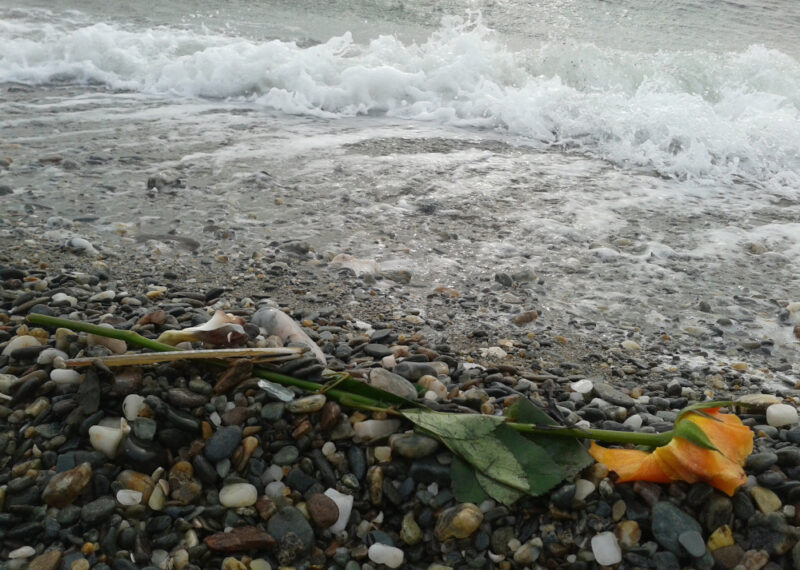
The Beast from the East is washing up roses; yellow roses, long-stemmed and fresh. They lie in front of me on the shingle shore, a bit battered but still intact, their damp petals closely furled and gently tinged with pink like cheeks flushed from the cold.
Where have they come from? I look around to the snow-covered hills behind and then back to the growing wildness of the sea ahead. It seems so improbably, to be standing here beneath all these white-capped waves and hills and find damp yellow petals at my feet, but here they are. I stare at them more closely. Their tender colour is vivid against the dark wet stones and, in this monochrome world, their presence makes everything else look even more black or white.
And I can’t decide which is whitest: the froth on the waves as they spill over, scalloping the shore, or the fresh snow lying in crystallised lines among the pebbles, or the smoothed fragments of quartz, or the plump breasts of the eiders paddling out into the wind, or the lean bellies of the herring gulls soaring up sideways in the stiff air, or the blanketing cloud pushing in briskly overhead, or the pure white disc of the sun within the cloud, sometimes dropping a cold platinum glint on the grey water, other times bestowing a soft sheen which rises on the slow westering swell before casting itself graciously on the shore.
I can’t decide and it doesn’t matter as I stand here before this shone water, before this powerful sea turning itself over with a glancing tenderness at my feet, softly smashing on the shingle like crumpled petals, like flung roses washed clean.
West Bay, Dunoon, Argyll, Scotland
28th February 2018
Bodø havn, Bodø, Nordland, Norway
26th June 2017
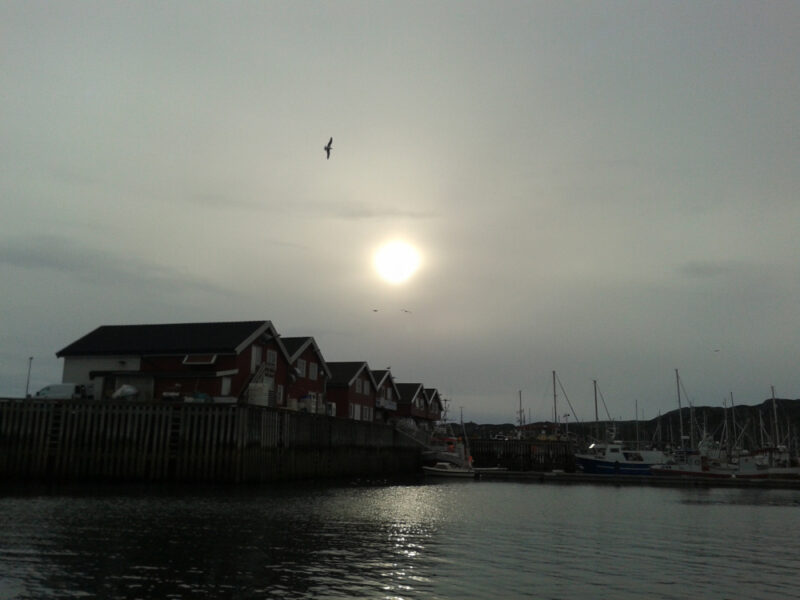
We sailed south to get here but as I wander about I have the uncanny sense that we’ve come further north. Maybe it’s all the whiteness. The large harbour where we’re moored is full of white boats – packed ranks of them, all gleaming, from the shiny power boats and sleek yachts to the large ferries, and even the fishing boats – a stark change from the rustbuckets lurching around Scotland. The docks themselves, an extensive network of floating wooden walkways, are weathered to a silvery grey. Ashore too, paleness dominates. The pavements are an almost-white concrete, and all the large buildings around the harbour are pale: the minimalist white stone library and concert hall, the light grey hotels and apartment blocks, the huge white silos further along on the industrial waterfront. They form crisp negative silhouettes against the dark mountains which surround the city, which, in turn, form their own silhouettes against the now cloudy white sky, silhouettes scooped here and there with bright patches of snow.
It’s all so clean and so linear – a true Arctic city scene. Many of the streets and buildings are fronted and roofed in plate glass, further reflecting all the cold brightness. It’s an impersonal-looking city in many ways, unlike the smaller wooden towns we’ve been in so far. Yet I feel at home here, in its spaciousness, in its lucent absence of colour – human as well as architectural. Elsewhere, the cool indifference of much Norwegian social contact has been disconcerting. Here it forms part of a sense of human space, a sense of a people neatly and graciously spread out, and I feel peaceful. There is room here, on the bleached wooden docks, on the wide glassed streets. Pale, clear room.
Especially in this room, on the first floor of the Bodø Bibliotek. The room is a distillation of the city itself, spaciously arranged and immaculately white. The floors are lined with warm wood but everything else – the walls and bookshelves, the tables and chairs – is white. Almost everywhere I look I see clean whiteness and I can look everywhere because the entire sea-facing wall is made of huge panes of glass. From the outside, the glass looked bluish but from in here it’s invisible, and in the uneffusive afternoon light there’s a sense of continuity, as if the glass is not holding things in but letting things out. I feel as if I’m outside as well as inside, my sight lines extending out smoothly to the street and the harbour and, beyond, to the grey south-west line of the sea.
I walk up the softly side-lit stairs to the upper floor and into its central atrium. It’s glass-walled all around and open to the sky, with a pale grey stone floor upon which, unexpectedly yet perfectly, sits a massive grey boulder. Its immense weight anchors the ascending height: I understand why they put it here. This is the heart of the building, the high centre.
I put my hand on the boulder and listen. The city is quiet from here and I notice that I am too – unusually so. The library is doing its work, lending me its patient grace and clarity, its sheer and simple form. I turn my attention inward for a moment and find my mind, normally a fairly cluttered chamber, has become a large transparent room, sparsely furnished, its low hum of chatter like an audible silence. The thoughts within it are spacious, elevated and calm. They drift outwards from this open room, over the pale glass-vaulted city, over the snow-lined peaks and out into the ever-enveloping opaque white sky.

Bodø, Nordland, Norway
26th June 2017

Cwm Garw, Glamorgan, South Wales
20th November 2015

The world has been settled with a soft kindness. The sun glows with it. The pink tinge of the dawn lingers. We all feel a little tender. Our cups of tea steam up the windows, diffusing the whiteness outside into a gentle haze.
When I worked in a cafe in Montreal, we noticed that people were different the first morning it snowed. They would drift in off the street, snowflakes still falling from their hats and hair, looking around as if in a slight daze, the women leaning their heads a little wistfully, the men asking for their coffee in a quieter voice.
The atmosphere seemed to become a bit romantic and, when I could, I would put Ella Fitzgerald on the stereo and although we didn’t dance it felt like we were all yearning to – to slowly twirl each other around the pastries and croissants, and touch each other on the cheek, and melt a little…
Cwm Garw, South Wales
14th January 2024