rain

Queen’s Park, Glasgow, Scotland
2nd November 2017
Queen’s Park, Glasgow, Scotland
2nd November 2017
Autumn leaf fall
– with such intent
Cwm Garw, Glamorgan, South Wales
29th September 2017

Pussy willow, Vettøy, Nordland, Norway
24th June 2017
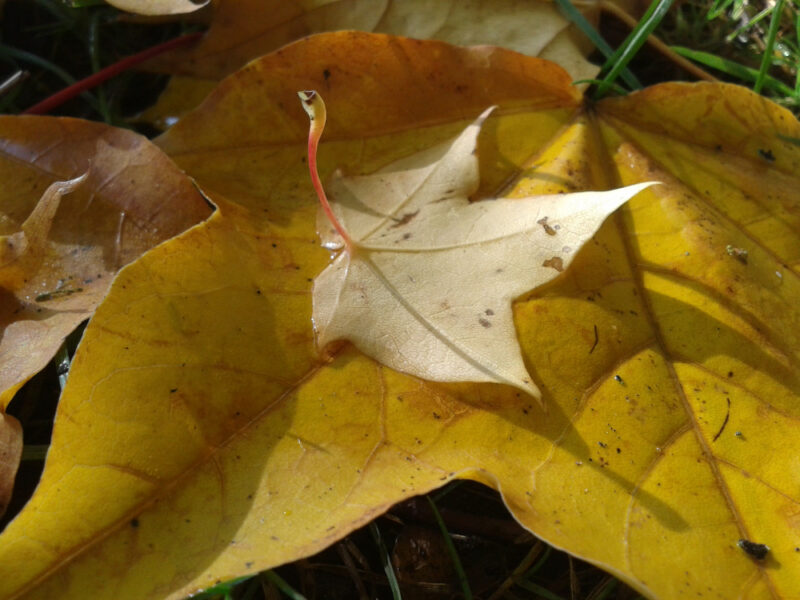
Yellow is an undemanding colour, less emotive than red, yet no less intense. It comes to meet you, levelly, entering you somewhere beneath your turbulent heart. You let it in and sit with it and you find that, wherever you have been, you now have a place to come to. Like a sheltered patch in a city park beneath a sugar maple carpeted with russet and yellow leaves. You don’t gather up handfuls of them, the way you would if they were red, but just sit and watch the shafts of sunlight illuminating them intermittently, softly picking out their curled points and broad palms. This is where you are now. It’s a fine autumn morning in the north and nothing else is required.
Queen’s Park, Glasgow, Scotland
18th October 2016
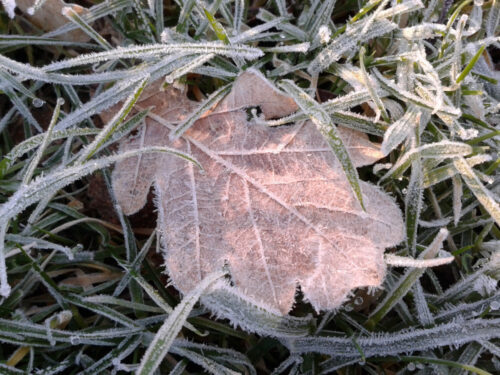
A frost meadow lies between the spreading oak trees and the slim birches, great palmfuls of leaves papering over the dew-sharpened blades, each of which is itself furred by myriad tiny hairs of frost, glittering in the first light, sun upon sword upon sward.
Queen’s Park, Glasgow, Scotland
23rd February 2016
Tonight we’ll go in search of bonfires, good fires,
fires of the hearth.
“When there is nothing left to burn, you must set fire to yourself.”
That’s what we’ll do then.
We’ll live for entrance and dancing,
in lithe leaping flames,
interweaving,
interleaving
Cwm Garw, Glamorgan, South Wales / Glasgow, Scotland
5th November 2015 / 2006

The coming of fall was always a relief when I lived in Montreal; a release from the hot glazed oppression of the summer, an opening door to freshness, clearness, breath! Even here in the UK, after the coolest summer in decades, I feel enlivened – and still relieved – at the sight of the tiniest autumnal tinge.
Why is that? I’m more at ease with loss than abundance, more at home in sparseness than profusion, perhaps: the peacefulness of knowing there is nothing more that can go. Or maybe it’s the pure allure of the uncovered, the newly shown. The world is disclosing itself as we layer up and retreat to our insulated indoor cocoons. But this is the time to be out!
Cwm Garw, Glamorgan, South Wales
6th October 2015
Acer palmatum is the technical name for the Japanese maple. A Swedish botanist named it in the 18th century after the hand-like shape of its leaves. Most maples’ leaves are hand-like: Canadian sugar maples (of the flag and the syrup) have broad palms flatly spread. The Acer palmatum, however, has small dainty palms with tiny tapered fingers curling like a child’s hand (the Japanese had already variously named it after the hands of babies and even frogs). And they seem especially alive, these little maple-hands, lifting and shifting and shyly beckoning.
But what do they offer? The fruit of this palm-maple is “a pair of winged samaras,” each holding one seed. A samara? “A samara is a winged achene,” a flat papery thing, shaped to allow the wind to carry the seed far from its parent tree.
“A samara is sometimes called a key,” (wikipedia continues) “and is often referred to as a wingnut, helicopter, whirlibird…” And they do travel. I was always picking up green sugar and silver maple keys as they parachuted around the sidewalks when I lived in Montreal. Their fine veined forms intrigued me. I collected them superstitiously, as if they might actually unlock something: open something, lighten something, transport me through a new sky. You’d find them in all sorts of places, birled around by the warm breezes, often with no maple tree in sight.
The little red keys, achenes, samaras of this Japanese maple are so much more delicate though. They could take off on the faintest breath of wind. Indeed, I plucked one from this tree in this garden last spring and carried it with me until I flew to Japan in the autumn and let the seed fall. The seed itself wasn’t so old but the dream was, long-carried and finally coming to fruition, as maybe a wee many-handed maple is now, in the wooded grounds of an old Shinto shrine somewhere in deepest Tokyo…

Bryngarw Country Park, Glamorgan, South Wales
9th June 2015
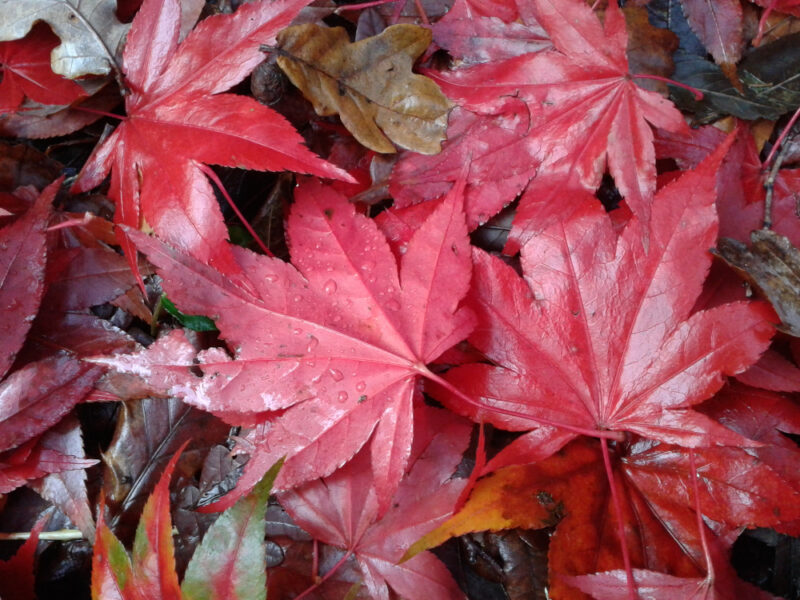
Life changes after death. It becomes less about what you do than what you notice; and after you died it was the tiniest things which sustained me.
It was a sudden fall – within days of your death there were leaves on the ground – and out walking I’d find myself rescued by a bright glimpse of colour. I found consolation in all the hues but solace specifically in red, as if it matched something in me, as you did. I became obsessed by the search for the perfect crimson, spending wet mornings on my knees, wrist-deep in the fallen foliage, desperately prospecting for a silent, scarlet resolution.
I don’t know if it was the intensity of red that soothed me or its tenderness but it seemed to me then that everything came back to this primary, primal colour. It’s the colour of beginnings – our bloody animal births and the red tips and tinges of vegetation at the beginning of spring, and it’s the colour of glad ends – the rich wooded flame of autumn, the dusty suffusion of sunset. Seasonal and diurnal alteration. It’s the colour of change, the colour of vivacity, the colour of you.
Red became you. A ‘red-headed angel’, someone once called you, and you were: red-headed, red-hearted, red-blooded, red-tongued – and red-threaded, as I now am, dressing myself up in vermilion plumage to write to you. Even now – months after your death – the colour comforts and condenses me. Perhaps the writing does too. After all, we both found solace in words – in delving down, in pulling up, in drawing the truth to the surface and inscribing it there – the live line, the pulsing current. We wrote to keep going, to give ourselves something to hold onto until you broke, a red line of continuity, a red thread of faith.
Bryngarw Country Park, Glamorgan, South Wales / Montréal, Québec, Canada
15th November 2013 / Autumn 2004

Montréal, Québec, Canada
Fall 2009