a snowy morning in Queen’s Park
One for sorrow,
borne on fan-like wings:
sunlit, snow-tipped
concertinas of light.
Queen’s Park, Glasgow, Scotland
7th January 2022
One for sorrow,
borne on fan-like wings:
sunlit, snow-tipped
concertinas of light.
Queen’s Park, Glasgow, Scotland
7th January 2022
I keep seeing solitary magpies: on new year’s day, on the big oak tree which towers over the rooftops opposite, a single magpie hopping around the branches, fluffing its feathers; yesterday, over the hill out the back of the house, a smart flutter like a fan opening on its long straight handle; and today, a sharp-suited fellow strutting across the car park at Monmouth Services. Is it a reminder, as I drive north towards home, or a refrain: one for sorrow, one for sorrow, one for sorrow?
Surely not, I think, to the magpie now flitting between the tops of the young ash trees which separate the car park from the green field beyond. We’re in a sorry enough state already. But then I don’t find the sight of a single magpie sorrowful. I find it reassuring: a solitaire, the solo path, at least for a while.
I glance at it once more and it swoops down swiftly from the upper branch of the ash tree to the grass beneath. Like Annie Dillard’s mockingbird as it steps off a tree, it descends intently in a movement so sure it’s not like a movement at all but rather a revealing, an illustrating, for a moment, the shape of space itself; as if it’s slid down the invisible thread connecting the branch and the grass, joining the dots of their shared reality. Or maybe not joining or connecting which again imply travel, but simply demonstrating, like particles in a quantum physics experiment, the seamless contact of all things. The magpie slips down from the tree the way the earth rides its trajectory around the sun, the way I cruise up the dual carriageway in my van, as if it’s not about extension at all but the continuity of the blades of grass and the branch of the ash tree and the cloud-occluded sun and my van’s course up the A449, determined yet liberated, effortless, sorrow-free.
(Mockingbird from Annie Dillard’s stunning book,’Pilgrim at Tinker Creek’)
Monmouth Services, Sir Fynwy/Monmouth, Wales
3rd January 2022
Stoer beach, Assynt, Scotland
6th November 2021
We drive round the head of the loch to the harbour to see our friend’s new dive boat. The afternoon is cloudy and calm, the loch grey and smooth and, as I climb down the pier ladder and clamber aboard, I suddenly realise how much I miss being on the water. I’ve been dimly aware of this lately but now, as I stroll across the deck and look over to the pontoons where I used to live, I feel it acutely: I’m seasick again, only this time not from the sea but for it.
It’s funny how the subtler senses work. When l lived in Canada, by the end of the long snow and ice-bound winters I would crave greenness. It was like a thirst: a need for deep draughts of green, a desire that needed slaking. You’d think my longing for the sea would be a thirst too but it’s more like a hunger, as if I’m not dry but hollow. Even hunger doesn’t capture it fully though. What I feel now is not an appetite to be satiated – not a craving, not an onward desire – but an awareness of absence. To draw an analogy with the boat I’m standing on, whose fuel tanks have recently been rebuilt, I have an emptiness which wants to be filled.
It’s not that I’m not nourished living on land. I love my caravan and appreciate its greater space and comfort, and its relative stability now the autumn gales are coming in. Living on the water was less comfortable, more restless and raw, and I need to live ashore now. With the various damages from my head injury a year ago not yet resolved, I’m too sensitive to motion to spend another winter aboard. Yet I can’t help feeling insulated, cut off from a primal source. I miss the water and the life of it: the seals and otters, the sea and shore birds, and the sailors and fishermen I used to reliably encounter on the docks. And I find it strange that the view from my window is no longer linked to the phases of the moon. I still tear out the tide table from the Ullapool News and pin it up in the kitchen but without the moving presence of the tide I feel disconnected from it, and from something more fundamental – as if I’m not just out of tide but out of time.
Most of all, I miss the dynamism; the sense, however subtle, of being always in motion. Even on a calm sea, stillness aboard a boat is not the same as stillness on land – something that becomes immediately obvious if the keel even briefly touches the seabed. However static you appear to be, you’re still in a fluid medium, you’re still supported. In contrast, I am now held up by a sheet of plywood and a few breezeblocks. I enjoy the resulting vista – I can see across the loch and glimpse Suilven and Cul Mor through the trees – but I feel unsettled. I’m not sure if I feel ungrounded or too grounded. And so I begin to do what I always did before I took to the sea: I seek the shore.
Lochinver, Assynt, Scotland
4th November 2021
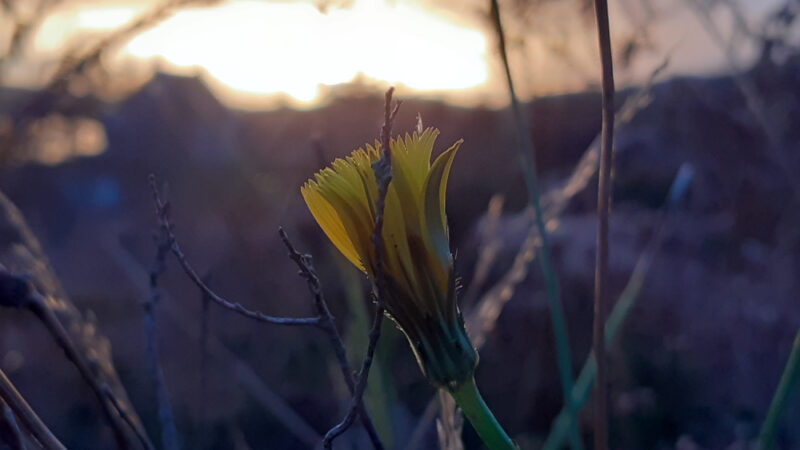
Lochinver, Assynt, Scotland
29th October 2021
I can’t get used to the fact that everything is static. I hear the wind gusting and I brace myself but nothing moves. The caravan walls shudder in the stronger gusts, and occasionally flex, which is a bit disconcerting, but that’s all: the caravan doesn’t lean over or bounce; it doesn’t rise or tilt or creak achingly against a dock; bottles don’t roll, mugs don’t slide and books don’t tip out from their shelves, even without bungee cord holding them in. I listen and hear nothing but the wind and no matter how it blows the caravan and all the objects in it remain in place.
I tell myself this but it’s taking a while to sink in. As I look around for a place to put down the small Japanese cymbals I’ve just been playing, I notice that I’m still automatically scanning the various shelves and surfaces for somewhere secure, for a snug spot where they won’t rattle annoyingly in the squalls or become dislodged and fall. I realise that this is unnecessary but I can’t not do it. I don’t trust it yet, this land life, this new abode ashore.
I knew it would be a transition, moving from a boat to a static caravan, but I thought living on land would feel more secure. In fact it’s slightly unnerving. As well as the strange stationariness of the caravan, there are the different sounds. The rain on the roof is louder and more insistent, with a harder quality, and instead of the specific noises of the sea, pushing at the docks and slapping at the hull, there’s a general roar. It must be the wind going through the trees which stand around the caravan and along this side of the loch but it sounds sourceless; a general emanation of loudness almost overwhelming in its immensity. There’s a novel range of more particular sounds too. In place of the relatively genteel wailing of the seals beneath the pier there’s a rude bellowing of stags, echoing distantly as well as close at hand, with grunts and humphs at times right outside my bedroom window; and instead of the dry creaking of the hoodies or hoarse croaks of the heron, there are the sweet chirrups and trills of the garden birds arriving at my feeders, an array of petite tits and finches blowing in and out like the leaves which themselves yield new sounds as they land, twigs attached, on the thin tin roof or knock against the window as they skirl down.
This is another surprise. I thought living on land would be quieter than living aboard in an industrial harbour with huge boats coming and going at all hours and where you’re receiving sounds transmitted through the water as well as through the air, but no. The growl of cars passing on the road outside is far more intrusive than the tickering sound of boat engines – even massive ones – filtering through the hull, and the weather is louder too. In the boat, the sound of rain falling was one of my favourite sounds: no matter how heavy the downpour, it was muted by the boat to a diffuse pitter-patter, a steady tempered tattoo. Here, the drops clatter loudly, as if a thousand people are clog-dancing on the roof, and in a shower of hail I find myself cowering beneath the downward assault. I suppose I shouldn’t be surprised. Although the caravan is less mobile than the boat it’s far less sturdy. The boat was built for bouncing around at sea, after all. Its decks and hull are no thicker than the roof and walls of the caravan but the fibreglass has been thickly laid up and the decks and roof reinforced in the middle with a layer of balsa wood. The caravan, by contrast, appears to be made of a few thin sticks of softwood lined with thin board on the inside and flimsy sheets of aluminium on the out. I was slightly alarmed the day we fitted the flue for my stove to see how easy it was to cut a hole in the roof. I really am living in a tin can.
Am I complaining? Not really. I’d rather hear the weather too distinctly than not clearly enough. When I’m staying in houses, I feel unsettled by not being able to hear the weather conditions. I feel too insulated from the world, too swaddled and cut off. There’s no chance of that here. I do miss being on the water, mind you – going up and down on the tide, moving to the rhythm of the sea – but I don’t miss the days and days of gales when the boat would lurch about like a drunk man on a rollercoaster; and although I’m away from the changing water levels, I’m more attuned to the changing light. And this is what I love here: the light, windows and windows of it. Much as I enjoyed living aboard, there was no getting around the fact that the boat was poky, its portlites slender and low-lying as the boat nestled itself hydro- and aerodynamically into the sea. Now I’m high and dry (literally, since we had to raise the caravan on several layers of breezeblocks to get enough of a downfall for the sewage pipe) with a wall of windows facing south, a clear view of the sky and even a glimpsing glance of the loch now that the bracken’s drying and subsiding. I can sit down and see out. And in this coming winter, when the light is at its most fugitive and beautiful, this is the most precious thing of all.
Lochinver, Assynt, Scotland
24th October 2021
Yesterday – For years I felt I was a gathering wave: all heaped up with nowhere to go and urgently looking for a shore to break on. Now I feel as if I’m a buoy on the sea, pushed up and down and back and fore in the tides and wind-driven surges, but essentially just held here in suspension – in motion without momentum – while out to sea the waves busily wash past.
I can’t get a grip on things, that’s the problem. Little things: dry paper, kindling, replying to emails. Big things: how to make a living, how to make sense of what’s happening to society, how to come to terms with what’s happened to myself. The thing with things is that they are too much. Even the little ones. Especially the little ones. A head-injured taiko player I spoke to online said that living with a brain injury is like having a hangover. All you want is comfort food and sleep and you know if you just ride it out it’ll pass. Except we’re still waiting.
Today – And then there are days like today when there is so much beauty: too much to take in, too much to give out. The sea is spilling over with golden blue light and in it all doubt is dissolved. For today at least, the waves don’t make me envious with their rhythmic fluid motion. Like me, they settle as the sun holds them, as the sun settles and holds everything, forever and ever.
Amen.
Lochinver, Assynt, Scotland
19th October 2021
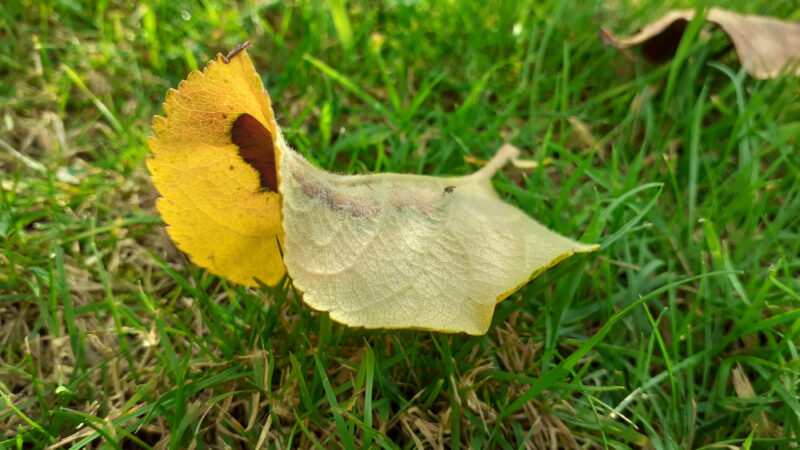
My aunt’s garden, Perth, Scotland
6th September 2021
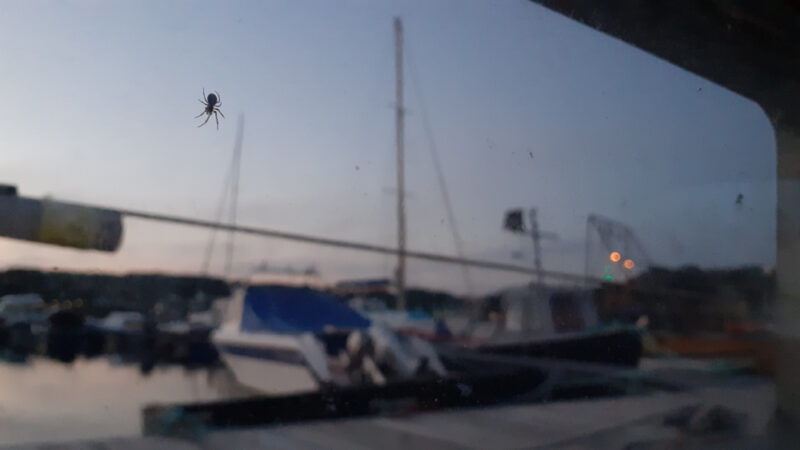
Ara’ Deg, Lochinver harbour, Assynt, Scotland
23rd July 2021
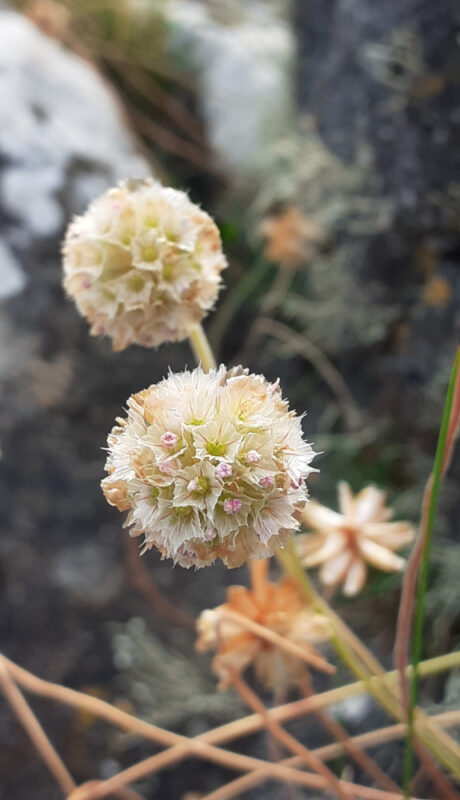
Thrift, Loch Inver, Assynt, Scotland
18th July 2021